
Photovoice – “A picture is worth a thousand words”
Media
Image
Blog content
There is an idiom in English that says “a picture is worth a thousand words” and yet social science research, especially ethnography, has often relied heavily on spoken and written words, with interviews, reflective writing and fieldwork notes usually comprising much of the data. In SmartUrbI, we have decided to use photographs taken by research participants as a prompt for reflection and dialogue. This innovative approach was developed as a method of community-based participatory research and is designed to promote empowerment, inclusion and social change, fitting nicely with our project’s ethos.
As the name suggests, photovoice uses photographs as a way of giving voice to research participants, aiming not only to document their insights and ideas, but to empower them within the research process. Selecting and showing photos to the rest of the team triggers a conversation about aspects of their experience which they deem significant. The smart urban intermediaries were invited to take photos that are meaningful or typical of their practice and then use these to tell the co-researchers why they have chosen to take this particular image and what it conveys. By capturing both the picture and the meaning, photovoice helps shape the research agenda, set priorities and generate data.
As such, photovoice allows us to access the unmediated experiences of practitioners, together with their interpretations of those experiences. The ‘voice’ aspect of the method can be used on a one-to-one basis or to stimulate group discussion and these accounts will provide input for the Living Labs. Through this collective analysis of the raw data, the practitioners are involved in the co-creation of knowledge, especially in revealing the tacit ‘know-how’ of intermediary practices.
Our intention is that using photovoice will expose some of the dilemmas and tensions felt by practitioners in their everyday activities and allow us to explore how these are resolved or managed. We expect that this technique of recording normal or noteworthy experiences will enable the project to reveal and understand the sometimes hidden and informal processes used by effective practitioners to be in touch with and listen to residents, entrepreneurs, service users and colleagues located in the anchor neighbourhoods and further afield. We hope that the use of photos and stories will prove an exciting way of comparing experiences across boundaries, including between our research sites.
The research team has undertaken training in how to use photovoice and prepared guidance for our intermediaries. We emphasise that they can take as many photos as feels convenient and appropriate, and that these can be as literal or as abstract as people choose. We are not concerned with the artistic merit or composition of the photos, as what’s important is what people have to say about each photo and how it reflects their everyday work.
We anticipate some risks and ethical challenges (for example around obtaining permission from those in the photos) and we may have to continually monitor and negotiate these. Technical difficulties in data analysis and management will also have to be overcome (including working out how to label and code the photos with their captions).
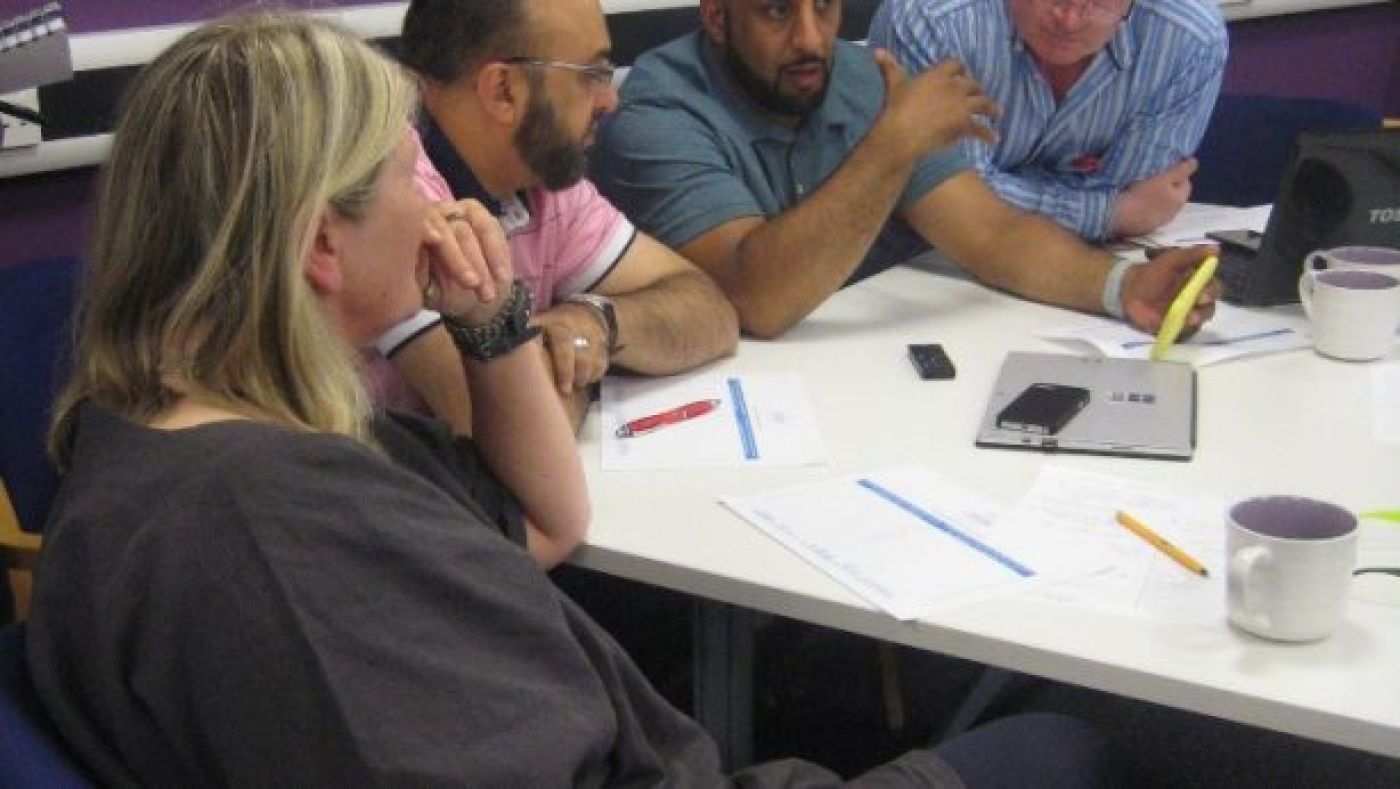
We have trialled the method during the first round of fieldwork and reviewed how it worked at the 2nd local living lab in early July. Several of the Smart Urban Intermediaries shared their photos using a variety of devices and explained their significance to other members of the group. This generated some interesting discussion and people reported that they had found the exercise useful in encouraging them to focus on their own role and contribution to community life (something they rarely did) and in stimulating reflections about their practice. All agreed that we should continue to use photovoice in the next phase of fieldwork and we hope to find ways of sharing the outputs more widely, perhaps at one of the transnational events or through this website.